
Dental implants are one of the best ways to replace missing teeth. They look like real teeth, they feel like real teeth, and they work like real teeth. But just like natural teeth, dental implants need proper cleaning every single day. If you skip cleaning, bacteria can build up around the implant, leading to serious problems.
This guide will show you exactly how to take care of dental implants and how to brush dental implants properly, so they last for many years.
Why Cleaning Dental Implants Matters
Many people think dental implants cannot get damaged because they are artificial. That is not fully true.
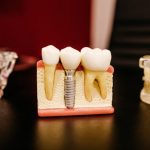
The implant itself — the titanium post placed into the jawbone — cannot get a cavity. But the gum tissue and bone around it absolutely can get infected. This infection is called peri-implantitis. It is similar to gum disease and can cause bone loss around the implant. If it gets bad enough, the implant can become loose and fail.
That is why cleaning is so important. A good daily routine protects the gum tissue and keeps the bone healthy.
Can Dental Implants Be Cleaned Like Natural Teeth?
This is a question many patients ask their dentist. The simple answer is yes, in most ways they can be cleaned like natural teeth, but there are a few important differences to keep in mind.
Natural teeth have roots that are held in place by small connective fibers that connect them to the jawbone. Dental implants are different because they are directly fused to the bone through a process called osseointegration. Because of this, the area where the implant meets the gums needs a bit more careful cleaning.
The crown, which is the part you can see in your mouth, can be brushed just like a normal tooth. However, cleaning around and under the implant requires special tools to make sure plaque and food particles are fully removed.
If you are looking for dental implants in Airdrie, know that proper daily cleaning and regular dental visits are important for long-term success.
How to Brush Dental Implants Properly
Brushing is the first and most important step in implant care. Here is how to do it correctly:
Choose the Right Toothbrush
Use a soft-bristled toothbrush — either manual or electric. Hard bristles can scratch the implant crown surface and irritate the gum tissue around it. Many dentists recommend an electric toothbrush because it removes plaque more effectively.
Use the Right Toothpaste
Avoid toothpastes with harsh abrasive ingredients. Look for a low-abrasive toothpaste. Ask a dentist near you to recommend a brand if unsure.
Brushing Technique
- Brush at least twice a day — morning and night
- Hold the brush at a 45-degree angle to the gumline
- Use gentle circular motions around the implant crown
- Brush all four sides of each implant tooth
- Spend at least two minutes brushing.
Do not scrub too hard. Gentle pressure is enough to remove plaque without damaging anything.
Flossing Around Dental Implants
Regular string floss can work, but implant-specific floss or dental tape works better. It is thicker and softer, which makes it easier to clean around the implant base.
Another excellent option is a water flosser (oral irrigator). It uses a stream of water to flush out food particles and bacteria from around the implant and under the gumline. Many dentists recommend water flossers as part of a daily implant care routine.
Interdental brushes — small bottle-brush-shaped tools — also work very well to clean between implants and natural teeth.
Additional Care Tips for Long-Term Implant Health
- Rinse with an antibacterial mouthwash daily to reduce bacteria in the mouth
- Avoid smoking since it reduces blood flow to the gum tissue and slows healing
- Limit sugary and acidic foods that feed harmful bacteria
- Do not use toothpicks made of wood or metal around implants — they can scratch surfaces
- Visit a dentist in Airdrie every six months for a professional cleaning and an implant check-up
Professional cleaning by a dentist removes calculus (tartar) that builds up even with perfect home care.
Complete Your Smile with Dental Implants!
At Kingspointe Dental Centre, we help patients replace missing teeth with dental implants that look and feel just like natural teeth. Our dentist uses a titanium post placed in the jawbone, which fuses to the bone through osseointegration to provide a strong, permanent base. We provide full implant care — from placement to follow-up.
Ready to restore your smile? Contact Kingspointe Dental Centre today and book your dental implant consultation with our dentist!
FAQ
How often should dental implants be professionally cleaned?
Visit a dentist at least twice a year for professional cleaning and a full oral examination.
Can I use whitening toothpaste on dental implants?
It is best to avoid it. Whitening toothpastes are often too abrasive and can scratch the surface of an implant crown.
What happens if peri-implantitis is left untreated?
Untreated peri-implantitis leads to progressive bone loss around the implant, which can eventually cause the implant to fail and need removal.